

 Image 1 of 1
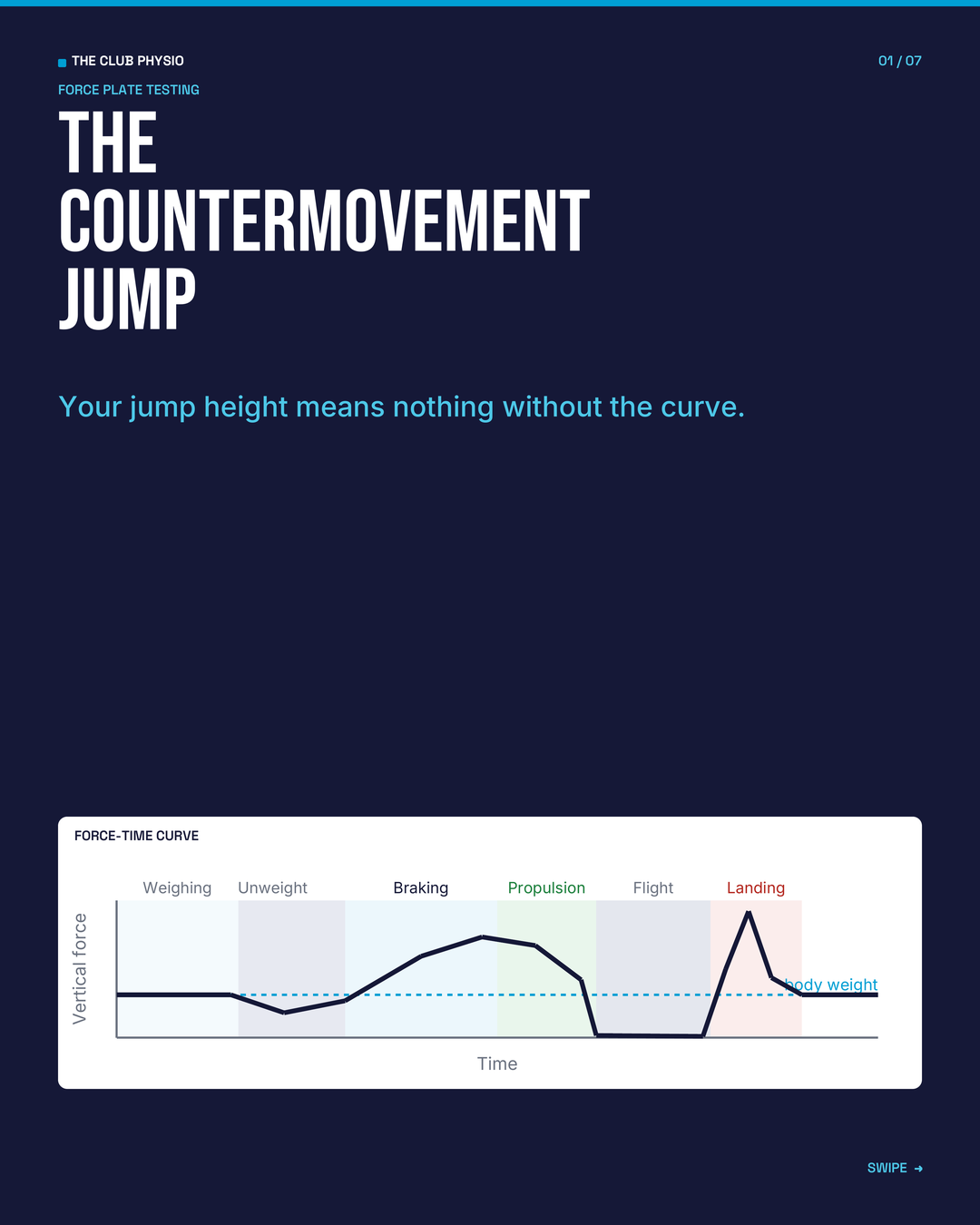
The countermovement jump is the workhorse of force-plate testing, and also the most misread. Most people stop at the jump height, but two athletes can hit the same number in completely different ways, and the difference is exactly what you need to see. This carousel walks through how to read the force-time curve rather than just the output: the phases of the jump (weighing, unweighting, braking, propulsion, flight and landing), the metrics that actually matter (propulsive impulse, RSI-modified, and left-right asymmetry), and what common curve shapes tell you about how an athlete produces force. It finishes with how to turn all of that into a training decision, from cueing a sharper countermovement to prioritising strength or ballistic work. Built for physios and S&C coaches who want their jump testing to inform what they do next, not just fill a spreadsheet.
The countermovement jump is the workhorse of force-plate testing, and also the most misread. Most people stop at the jump height, but two athletes can hit the same number in completely different ways, and the difference is exactly what you need to see. This carousel walks through how to read the force-time curve rather than just the output: the phases of the jump (weighing, unweighting, braking, propulsion, flight and landing), the metrics that actually matter (propulsive impulse, RSI-modified, and left-right asymmetry), and what common curve shapes tell you about how an athlete produces force. It finishes with how to turn all of that into a training decision, from cueing a sharper countermovement to prioritising strength or ballistic work. Built for physios and S&C coaches who want their jump testing to inform what they do next, not just fill a spreadsheet.